

Why Yellow Jackets Are More Aggressive in Late Summer & Fall
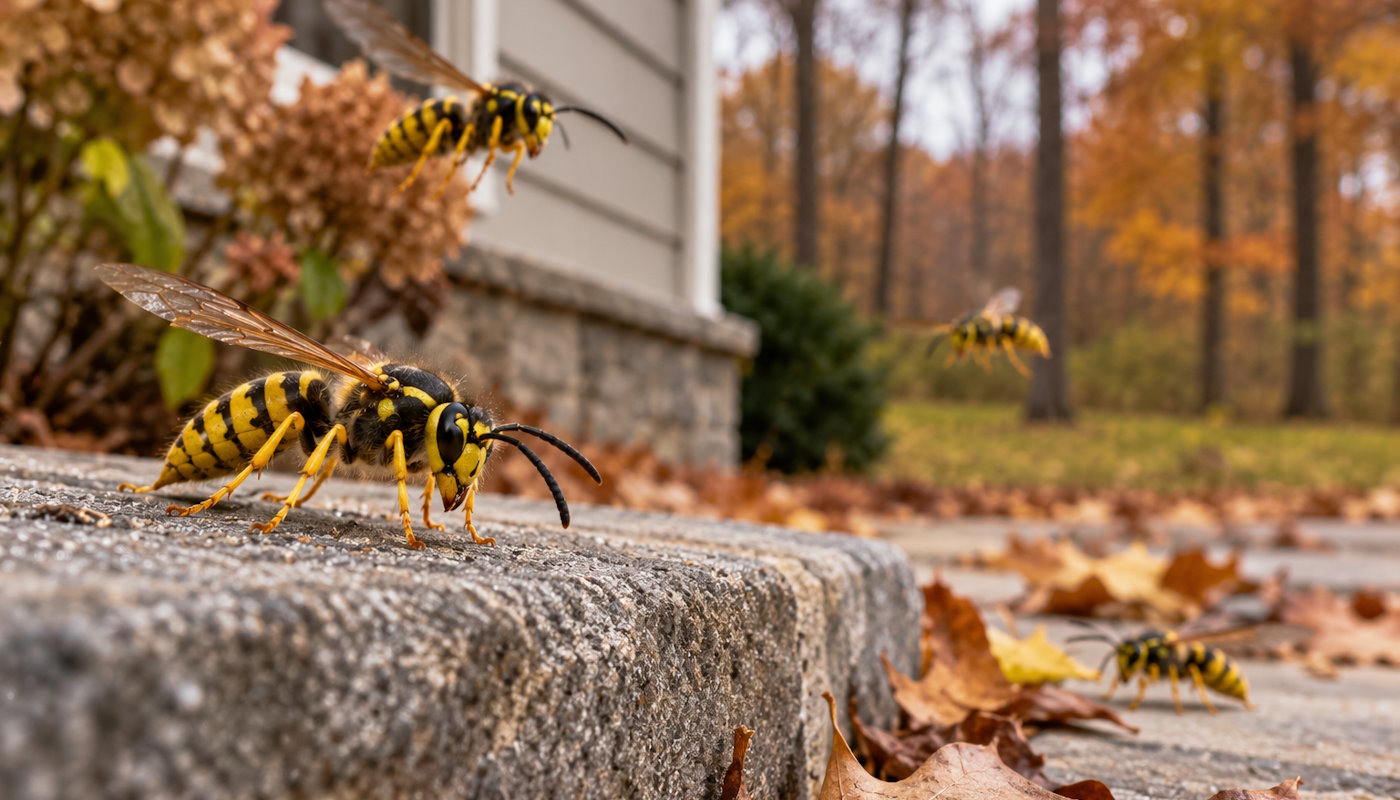
Why Are Yellow Jackets So Aggressive in Late Summer and Fall?
Late summer and early fall mean cooler nights, changing leaves and plenty of time spent outdoors in Connecticut. Unfortunately, this is also the time of year when yellow jackets can become especially noticeable around homes, patios, decks, trash cans and outdoor gatherings.
If it seems like yellow jackets suddenly become more aggressive as summer comes to an end, you’re not imagining the increased activity. Yellow jacket colonies grow throughout the warmer months, and their behavior and food sources change as the season progresses. This can lead to more encounters with people during late summer and fall.
Understanding why this happens can help you recognize a potential yellow jacket problem and know when it’s time to contact a professional for pest control in Connecticut.
Why Are Yellow Jackets More Active in Late Summer?
Yellow jacket colonies begin relatively small in the spring. A queen establishes a nest and begins producing workers, which then help expand the colony and provide food. Throughout spring and summer, the population continues to grow.
By late summer, a yellow jacket colony can be much larger and more active than it was earlier in the year. More yellow jackets are leaving the nest in search of food, which increases the likelihood that you’ll encounter them around your property.
This is one reason homeowners who barely noticed yellow jackets in June or July may suddenly find themselves seeing them regularly in August, September and into the fall.
Why Are Yellow Jackets So Aggressive in the Fall?
One of the biggest changes late in the season involves food. Earlier in the summer, yellow jackets feed heavily on protein sources, including other insects. As the season progresses, their dietary preferences increasingly shift toward sugary foods and carbohydrates.
That can bring yellow jackets into much closer contact with people.
Common late-summer and fall attractions can include:
- Soda and other sweet beverages
- Fruit and fruit juices
- Outdoor food and desserts
- Garbage and recycling containers
- Pet food
- Overripe or fallen fruit
- Food left behind after cookouts and outdoor gatherings
At the same time, yellow jackets will defend their nests when they perceive a threat. Accidentally approaching or disturbing a hidden nest can trigger defensive behavior from multiple insects.
When Is Yellow Jacket Season in Connecticut?
Yellow jackets can be active throughout the warmer months in Connecticut, but homeowners often notice the greatest amount of activity during late summer and early fall.
Colonies have had months to grow by this point, and increased foraging activity can make yellow jackets much more visible around homes and businesses.
Activity generally declines as temperatures become consistently colder. Unlike honey bee colonies that can survive through winter, most members of a yellow jacket colony die as cold weather arrives. New queens survive the winter in protected locations before emerging to establish new colonies the following spring.
Where Do Yellow Jackets Build Their Nests?
One reason yellow jackets can be difficult to deal with is that their nests aren’t always easy to see. While some stinging insects construct highly visible nests, yellow jackets frequently establish colonies in concealed locations.
Potential nesting areas around a property include:
- Underground burrows
- Holes in lawns and landscaped areas
- Under porches and decks
- Inside wall voids
- Around sheds and other outdoor structures
- Inside abandoned animal burrows
- Near gaps or openings around a building
You may never see the nest itself. Instead, you might notice multiple yellow jackets repeatedly flying into and out of the same opening.
How Do You Know If You Have a Yellow Jacket Nest?
Seeing an occasional yellow jacket doesn’t necessarily mean there’s a nest on your property. However, consistent activity in one particular location deserves a closer look.
Signs of a nearby yellow jacket nest can include:
- Numerous yellow jackets around your yard
- Repeated activity around the same hole in the ground
- Yellow jackets entering and exiting a gap in your home
- Heavy activity around a deck, porch, shed or landscaping area
- Yellow jackets appearing inside your home
- A noticeable increase in activity over a short period of time
If you see yellow jackets consistently traveling to the same spot, avoid standing near or disturbing the area. Their flight pattern may indicate an entrance to a nearby nest.
Are Yellow Jackets the Same as Bees?
No. Although people often use the terms “bee” and “wasp” interchangeably, yellow jackets are wasps.
Correct identification matters because different stinging insects behave differently and may require different approaches. Yellow jackets are generally smooth-bodied with distinctive black-and-yellow markings, while many bees appear fuzzier.
Another important difference is their ability to sting. Honey bees generally leave their barbed stinger behind after stinging, while yellow jackets can sting repeatedly.
If you’re unsure what type of stinging insect is around your home, a professional can identify it before determining the appropriate treatment. You can learn more about Lavery’s bee and stinging insect control services in Connecticut.
How Can You Keep Yellow Jackets Away?
You can’t prevent every yellow jacket from flying through your yard, but you can make your property less attractive to foraging insects.
During late summer and fall, consider taking a few simple precautions:
- Keep outdoor trash cans tightly sealed.
- Rinse recyclable bottles and cans before placing them outside.
- Clean up food and spills after outdoor meals.
- Don’t leave sweet drinks uncovered.
- Pick up fallen or overripe fruit around fruit trees.
- Keep pet food indoors when possible.
- Inspect your home’s exterior for openings where pests may enter.
- Watch for repeated yellow jacket activity around holes, cracks and landscaping.
These steps won’t eliminate an established colony, but they may help reduce the food sources that attract yellow jackets to areas where your family spends time.
Should You Remove a Yellow Jacket Nest Yourself?
Trying to remove or disturb an active yellow jacket nest can be risky, particularly when the nest is large, concealed or located in the ground.
Yellow jackets may respond aggressively when their colony is threatened, and unlike some bees, they are capable of stinging multiple times. Attempting to knock down a nest, block an entrance or disturb an underground colony can result in numerous yellow jackets emerging at once.
The location of the nest can also make DIY treatment difficult. If yellow jackets have entered a wall void or another part of a structure, simply sealing the visible opening may not resolve the underlying problem.
If you suspect an active nest near your home, it’s safer to keep people and pets away from the area and have the situation evaluated by an experienced pest control professional.
Professional Yellow Jacket Control in Connecticut
A yellow jacket nest near an entrance, patio, deck, play area or other frequently used part of your property can quickly become more than an inconvenience.
Ed Lavery & Sons Pest Control has been helping Connecticut homeowners with pest problems since 1960. Our experienced team can identify the stinging insect you’re dealing with, locate areas of activity and determine an appropriate treatment based on the specific situation.
Our approach to Integrated Pest Management emphasizes proper identification, inspection, prevention and targeted pest-control methods.
If yellow jackets are making it difficult to enjoy your property this late summer or fall, don’t wait for someone to get stung. Contact Ed Lavery & Sons Pest Control to have your yellow jacket problem professionally evaluated.
Frequently Asked Questions About Yellow Jackets
What month are yellow jackets most aggressive?
Yellow jacket activity is often especially noticeable during August, September and early fall in Connecticut. Colonies have grown throughout the summer, and changes in available food sources can bring foraging yellow jackets into more frequent contact with people.
Why are yellow jackets attracted to my yard?
Yellow jackets may be attracted to sugary drinks, food, garbage, fallen fruit and other available food sources. Frequent activity in one concentrated area can also indicate that a nest is located nearby.
Do yellow jackets die in the winter?
Most members of a yellow jacket colony die when cold weather arrives. Newly produced queens survive by overwintering in protected areas and can establish new colonies the following spring.
Can yellow jackets sting more than once?
Yes. Unlike honey bees, yellow jackets can sting repeatedly, which is one reason disturbing an active nest can be dangerous.
Should I seal a hole where yellow jackets are entering my house?
Don’t automatically seal an active entrance. If the opening leads to a nest inside a wall or another structural void, blocking the visible entrance may cause the insects to search for another way out. Have the activity inspected so the nest location and appropriate treatment can be determined first.
When should I call a yellow jacket exterminator?
Consider professional help when you’ve located or suspect an active nest, see large numbers of yellow jackets, notice them entering a structure, or have a nest near an area frequently used by people or pets. Professional identification and treatment can help address the colony without unnecessarily disturbing it.