

Spotted Lanternflies in Connecticut: What Homeowners Should Know
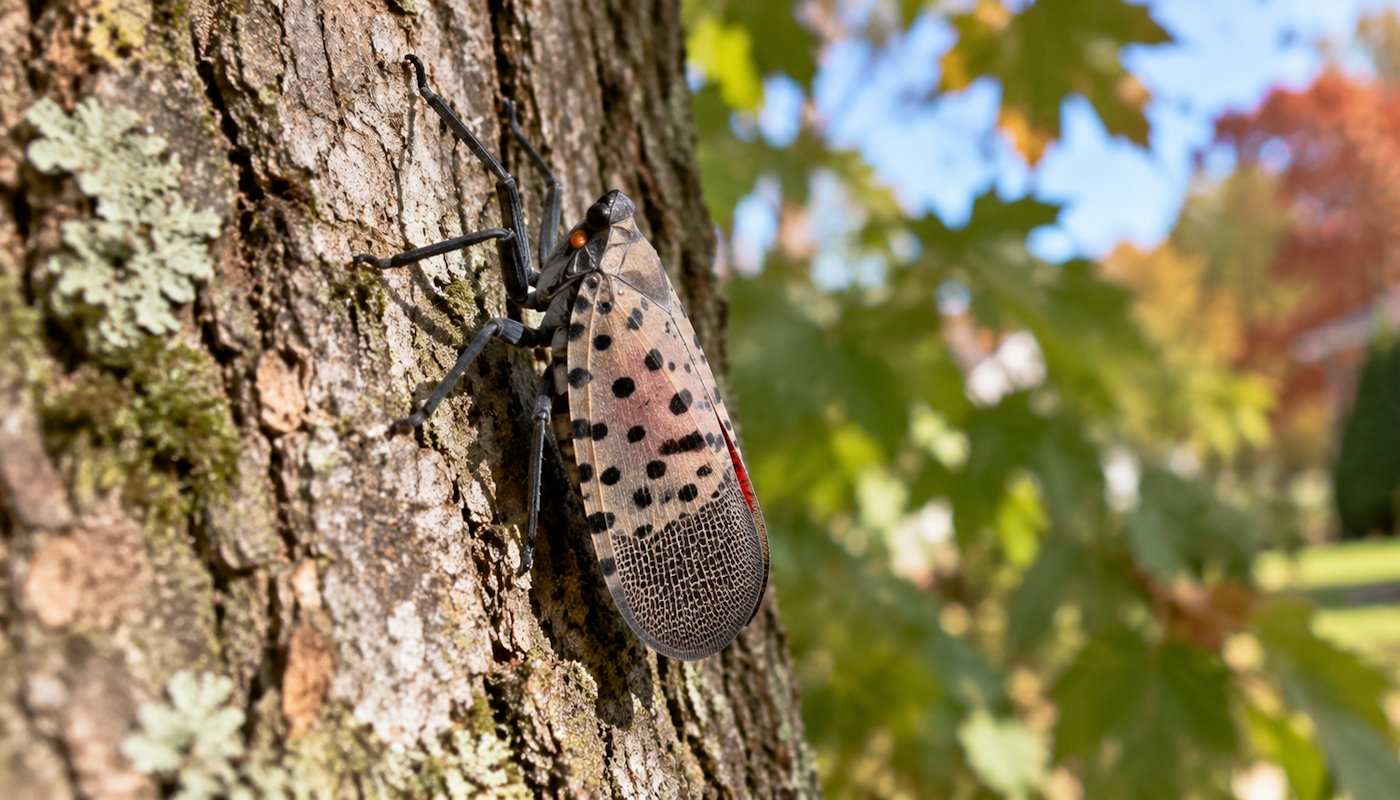
If you’ve noticed an unusual spotted insect crawling on a tree, hopping across your patio or gathering around plants, you may have encountered one of Connecticut’s increasingly common invasive pests: the spotted lanternfly.
The spotted lanternfly (Lycorma delicatula) is an invasive insect that was first detected in Connecticut in Fairfield County in 2020. Since then, it has continued to spread. Spotted lanternflies have now been observed in all eight Connecticut counties, making identification and prevention increasingly important for homeowners across the state.
While spotted lanternflies don’t pose a direct threat to people, large populations can become a significant nuisance and potentially damage certain plants, trees and agricultural crops.
Here’s what Connecticut homeowners should know about spotting these invasive insects, recognizing the signs of an infestation and helping limit their spread.
What Is a Spotted Lanternfly?
Despite its name, the spotted lanternfly isn’t actually a fly. It’s a planthopper that feeds by piercing plant tissue and consuming sap.
Spotted lanternflies are native to parts of Asia and were first detected in the United States in Pennsylvania in 2014. Since then, they have spread into Connecticut and numerous other states.
Their ability to feed on many different plants, reproduce quickly and hitch rides on vehicles and outdoor objects has helped them expand into new areas.
Are Spotted Lanternflies in Connecticut?
Yes. Spotted lanternflies are now established in Connecticut and have been observed throughout the state.
The first established Connecticut populations were identified in Fairfield County in 2020. Since then, their range has continued to expand, and sightings have now occurred in every Connecticut county.
Connecticut maintains a spotted lanternfly quarantine intended to help slow the insect’s spread. This is particularly important because spotted lanternflies and their egg masses can travel unnoticed on vehicles, trailers, firewood, outdoor furniture, landscaping materials and other objects.
What Does a Spotted Lanternfly Look Like?
One reason spotted lanternflies can be confusing is that their appearance changes dramatically as they develop.
Early-Stage Nymphs
Young spotted lanternflies are small and wingless. They are primarily black with distinctive white spots. Newly hatched nymphs can be only about 1/8 inch long, making them easy to overlook.
Late-Stage Nymphs
As spotted lanternflies mature, their appearance changes significantly. Late-stage nymphs develop bright red coloration along with black areas and white spots.
Adult Spotted Lanternflies
Adult spotted lanternflies are approximately one inch long. When their wings are closed, they appear mostly grayish or tan with black spots.
When they open their wings, however, they become much easier to recognize. Their hindwings display striking red, black and white coloration.
Adults can crawl, jump and fly short distances, although they’re often better known for their ability to hop quickly when approached.
When Are Spotted Lanternflies Active in Connecticut?
The spotted lanternfly has one generation per year, and the pest you encounter will depend largely on the season.
- Spring: Eggs begin hatching and small black-and-white nymphs emerge.
- Early summer: Nymphs continue feeding and growing.
- Mid-to-late summer: Nymphs develop their distinctive red coloration before becoming adults.
- Late summer and fall: Adult spotted lanternflies are active, feed on host plants and eventually begin laying eggs.
- Winter: Adult lanternflies die after freezing temperatures arrive, but their egg masses survive the winter and hatch the following spring.
For Connecticut homeowners, fall is an especially important time to watch for both adult lanternflies and newly deposited egg masses.
What Plants Do Spotted Lanternflies Attack?
Spotted lanternflies can feed on a wide variety of plants.
Their preferred host is tree-of-heaven (Ailanthus altissima), another invasive species commonly found throughout the Northeast. However, spotted lanternflies aren’t limited to tree-of-heaven.
They may also feed on plants and trees such as:
- Grapevines
- Apple trees
- Walnut trees
- Maple trees
- Willow trees
- Hops
- Various hardwood trees
- Other ornamental and agricultural plants
This broad range of potential hosts is one reason spotted lanternflies are a concern for Connecticut agriculture, vineyards, landscapes and residential properties.
Do Spotted Lanternflies Damage Trees?
Spotted lanternflies feed by inserting specialized mouthparts into plant tissue and sucking sap.
A few insects feeding on a mature tree may not cause obvious damage. Large populations, however, can place greater stress on susceptible plants.
Heavy feeding can contribute to reduced plant vigor and other signs of stress. Grapevines are considered particularly vulnerable to spotted lanternfly feeding.
Another major problem comes from what the insects leave behind.
What Is the Sticky Substance Under a Spotted Lanternfly Infestation?
Spotted lanternflies consume large amounts of plant sap and excrete excess sugars as a sticky substance called honeydew.
When large numbers of lanternflies are feeding overhead, honeydew can accumulate on:
- Leaves
- Decks
- Patios
- Outdoor furniture
- Vehicles
- Driveways
- Plants underneath infested trees
Honeydew can also encourage the growth of a dark fungus known as sooty mold. While the mold doesn’t directly infect the plant, heavy buildup can cover leaves and interfere with photosynthesis.
The sugary honeydew may also attract other insects, including ants, bees and wasps, creating an additional nuisance around the property.
What Do Spotted Lanternfly Eggs Look Like?
Recognizing egg masses is especially important during fall and winter because destroying eggs can prevent dozens of lanternflies from emerging the following spring.
Female spotted lanternflies begin laying eggs in the fall. Fresh egg masses often look like a patch of gray or light brown mud smeared across a surface.
As the covering ages, it may become dry and cracked. Older or uncovered egg masses can resemble rows of small brown seeds.
Spotted lanternflies aren’t particularly selective about where they lay their eggs. Egg masses may appear on:
- Tree trunks and branches
- Rocks and stone
- Decks
- Fences
- Outdoor furniture
- Firewood
- Trailers
- Vehicles
- Outdoor equipment
- Other hard outdoor surfaces
Because egg masses can be deposited on movable objects, inspecting items before transporting them is an important way to help reduce the spread of spotted lanternflies.
How Do Spotted Lanternflies Spread?
Adult spotted lanternflies can move around locally by crawling, jumping and flying short distances. However, humans can unintentionally help them travel much farther.
Adults, nymphs and especially egg masses can hitch rides on vehicles and transported materials.
Before moving outdoor items from an area with spotted lanternfly activity, inspect things such as:
- Cars and trucks
- Trailers
- Campers and RVs
- Outdoor furniture
- Firewood
- Grills
- Lawn equipment
- Building materials
- Plant material
- Storage containers
Removing insects and egg masses before moving these items can help reduce the chance of transporting spotted lanternflies to another property or community.
How to Get Rid of Spotted Lanternflies
There isn’t one solution that will eliminate spotted lanternflies throughout an area. Instead, control typically involves identifying where they’re active and using appropriate management techniques for the situation.
Destroy Individual Lanternflies
If you encounter individual spotted lanternflies on your property, physically destroying them can help reduce the number of insects present.
Look for Egg Masses
Fall through early spring is a good time to inspect trees and hard outdoor surfaces for egg masses. Pay particular attention to areas where adult spotted lanternflies were active during summer and fall.
Identify Tree-of-Heaven
Tree-of-heaven is strongly associated with spotted lanternflies and can support significant populations. Identifying this invasive tree around a property can help determine where lanternflies may be congregating.
However, homeowners should avoid simply cutting down mature tree-of-heaven without understanding how the plant responds. Improper removal can stimulate aggressive root sprouting and potentially create additional trees.
Use Traps Carefully
Certain traps can be used to capture spotted lanternfly nymphs as they travel up tree trunks. Trap selection and placement matter, particularly because some trap designs can unintentionally capture birds and beneficial wildlife.
Consider Professional Pest Management
If you’re dealing with large numbers of spotted lanternflies around your property, professional pest management may help determine where the insects are concentrating and what control options are appropriate.
An Integrated Pest Management approach can combine identification, monitoring, habitat considerations and targeted control rather than relying on a single treatment.
Should You Report Spotted Lanternflies in Connecticut?
The Connecticut Agricultural Experiment Station maintains a reporting system to track spotted lanternfly activity across the state.
As of August 2026, Connecticut officials specifically request reports from Windham, Tolland and Litchfield counties. Reporting is optional for Fairfield, Hartford, New Haven, Middlesex and New London counties.
If you submit a report, take a clear photograph of the insect or egg mass and document the location where it was found.
Reporting guidance can change as spotted lanternflies continue spreading, so homeowners should check the current Connecticut Agricultural Experiment Station recommendations before submitting a sighting.
Are Spotted Lanternflies Dangerous to People or Pets?
Spotted lanternflies aren’t known for biting or stinging people, and they aren’t considered a direct human health threat.
For homeowners, the primary concerns are their potential impact on plants and trees, the sticky honeydew produced by large populations, sooty mold growth and the general nuisance created when hundreds or even thousands gather around a property.
Spotted Lanternfly Control in Connecticut
Spotted lanternflies are no longer limited to isolated parts of Connecticut. As this invasive pest continues to establish itself throughout the state, homeowners are increasingly likely to encounter adults, nymphs or egg masses around their properties.
Knowing what each life stage looks like, inspecting outdoor items before moving them and recognizing the signs of a larger infestation can help limit their impact.
Ed Lavery & Sons Pest Control has been helping Connecticut homeowners manage pest problems since 1960. If you’re dealing with unwanted insects around your home or property, explore our Connecticut pest control services or contact Ed Lavery & Sons Pest Control to discuss your pest-control needs.
Frequently Asked Questions About Spotted Lanternflies in Connecticut
Are spotted lanternflies in Connecticut?
Yes. Spotted lanternflies were first detected in Connecticut in Fairfield County in 2020 and have since been observed in all eight counties.
What kills spotted lanternflies?
Individual spotted lanternflies can be physically destroyed, while larger populations may require additional management methods. Egg-mass removal, appropriate trapping and targeted pest-management techniques can also help reduce populations. The best approach depends on the number of insects, their life stage and where they’re located.
What time of year are spotted lanternflies most active?
Adults are generally present in Connecticut from summer through fall. They begin laying eggs during the fall, and those eggs survive the winter before hatching the following spring.
Do spotted lanternflies survive Connecticut winters?
Adult spotted lanternflies die after freezing temperatures arrive, but their eggs can survive the winter. This is why inspecting for and properly managing egg masses during fall and winter can be an important part of control.
Do spotted lanternflies bite?
Spotted lanternflies feed on plants rather than people. They aren’t known for biting or stinging humans.
Should I report a spotted lanternfly in Connecticut?
Connecticut’s reporting recommendations depend on the county and can change as the insect spreads. As of August 2026, state officials request reports from Windham, Tolland and Litchfield counties, while reports from Connecticut’s other counties are optional. Check current state guidance when you make a sighting.
When should I call pest control for spotted lanternflies?
If you’re seeing large numbers of spotted lanternflies around your property, finding repeated concentrations on trees or dealing with significant nuisance activity, a professional pest-control company can help assess the situation and determine appropriate management options.